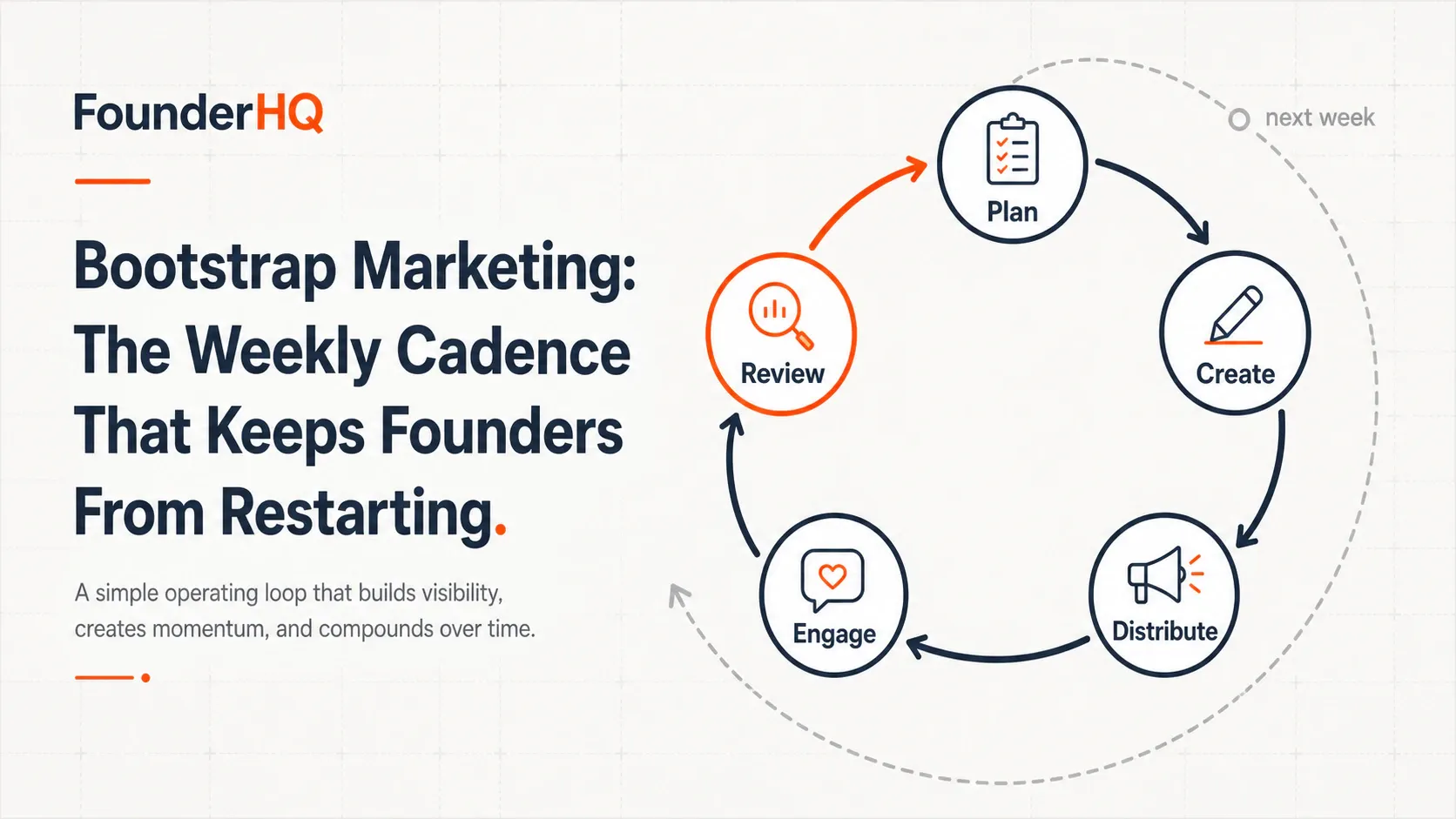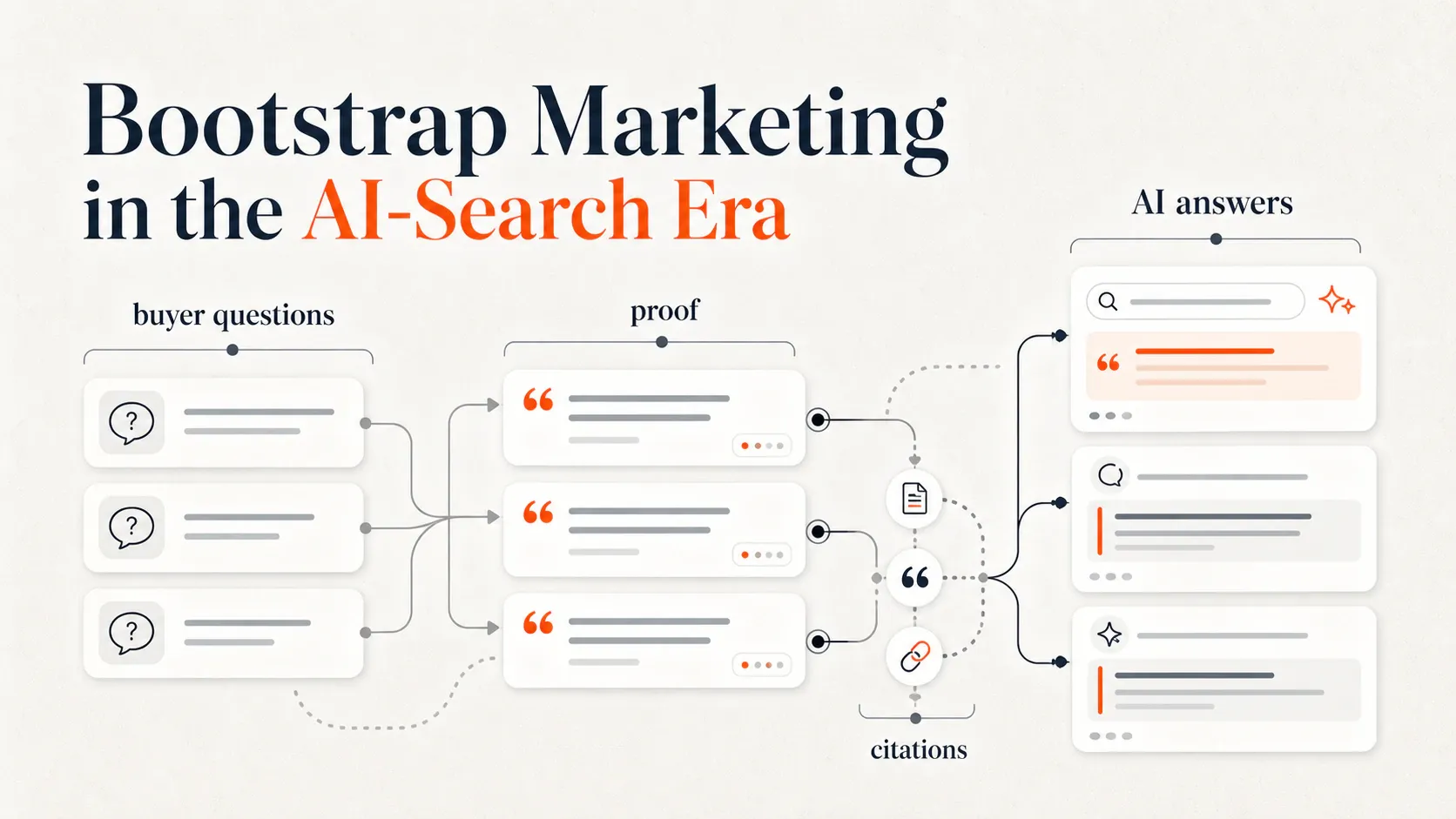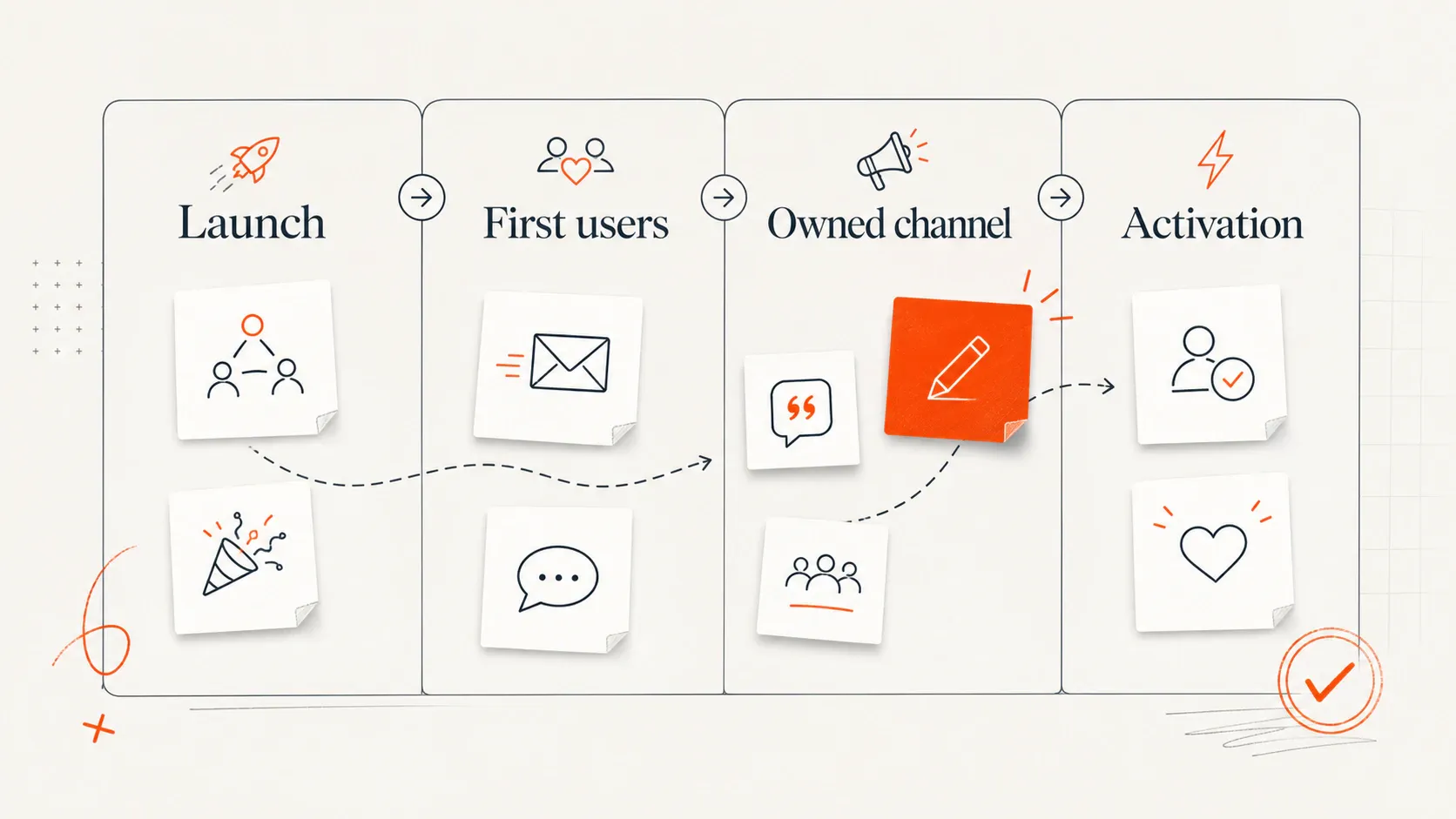
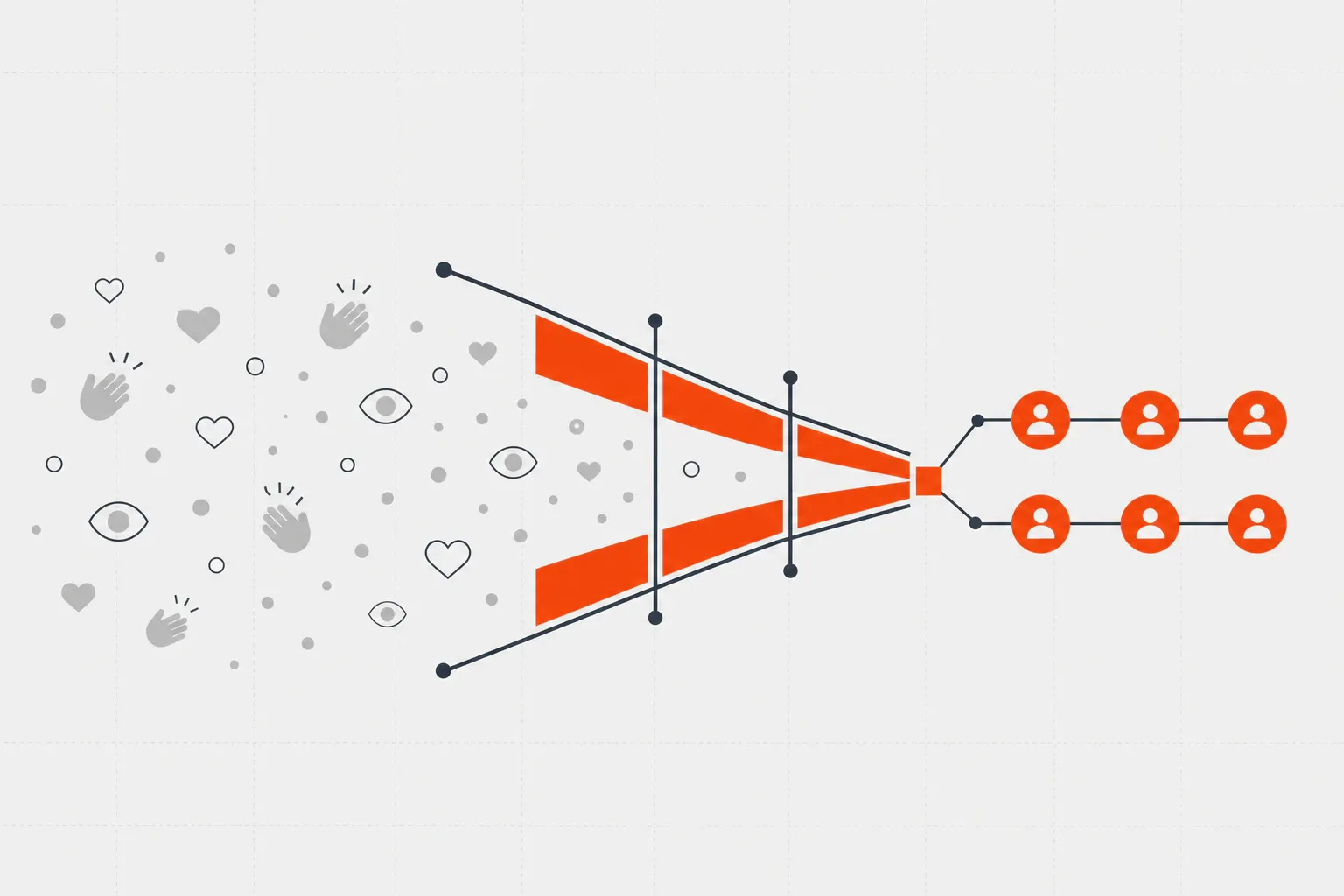
You crossed a milestone, posted the screenshot — "we just hit a new revenue high" — and the feed lit up. Likes, replies, a few new followers. Then nothing. No demo requests, no signups, no conversations that go anywhere. If that loop feels familiar, you don't have a posting problem. You have a conversion problem. Plenty of build-in-public advice will tell you to post more often, get more specific, or pick the right thing to share. Those matter, but they all live upstream of the gap that actually loses you customers: the missing layer between reach and pipeline. Most founders share the win and stop, leaving an engaged audience with no next step. That's the trap this guide is about. Transparency is your structural distribution advantage — buyers trust a real person showing the work far more than a polished brand campaign — but reach only compounds into revenue when you deliberately design for what happens next. What follows is a four-part post-to-pipeline system any solo founder can run without turning posting into a separate sales job: write for the buyer, add a capture mechanic, nurture with a sequence, and measure what actually converts.
The applause trap: why your posts get likes but no customers
The win-screenshot is the most natural thing to post and the most common dead end. It earns reach because it's relatable, and it earns replies because other founders are cheering for you. But applause is not pipeline. The people most likely to like a "we hit a milestone" post are usually other builders, not the buyers who would actually pay for what you're making. You feel momentum; your bank account doesn't move.
It helps to name what this article is not about. It isn't about whether build in public works (assume it does), how often to post, what to share versus hold back, or how to translate raw work into specific posts. Those are real problems, and they're worth solving — but they're upstream. The slice this guide owns is the conversion layer: the deliberate path that moves an engaged reader from "nice, a like" to "I'd like to talk."
Why is transparency such a strong starting point? Because it's an asymmetry you have and bigger competitors structurally can't fake. Industry analyses of founder-led content in 2026 consistently report that personal accounts dramatically out-distribute company pages — StartupCookie, for example, cites personal LinkedIn accounts generating roughly 7x the impressions of company pages, and notes inbound prospects who message a founder after reading their content converting at around 14.6% to a discovery call versus about 1.7% for outbound. Treat those as the sources' reported figures, not guarantees, but the direction is consistent across the field: a human showing real work earns trust a logo can't.
The catch is that this advantage only pays out if you build the bridge. Reach without a next step is a leak. The rest of this article is the four-part system that plugs it — summarized in the funnel below, then unpacked step by step.
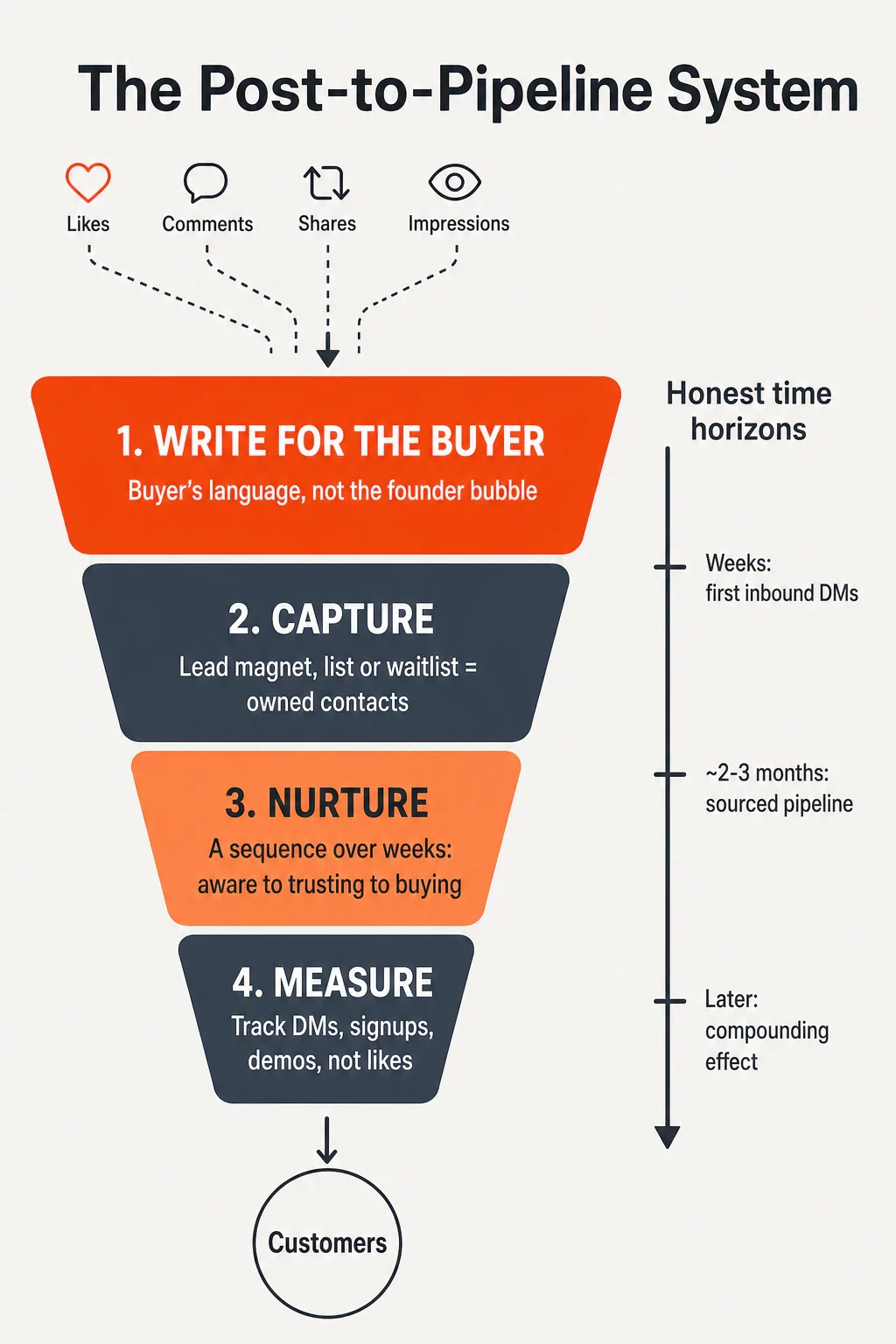
Read this as the operator's version: not a theory of attention, but a repeatable mechanism you can run on a busy build week. None of it requires you to become a full-time salesperson; it requires you to stop ending every high-reach post at the applause.
Step 1: Write for the buyer, not the founder bubble
The first reason build-in-public reach doesn't convert is that most of it is written for the wrong audience. When you post in the language of the indie-hacker community — MRR charts, stack debates, growth-hacking inside baseball — you grow your follower count among people who will never buy. Posts framed in your actual customer's language do something different: they pull in the person with the problem you solve.
Audit your last ten posts
Here's a fast diagnostic you can run in fifteen minutes. Pull up your last roughly ten posts and tag each one as either written for my buyer or written for the founder community. Be honest — a post about how you refactored your onboarding flow is usually for the bubble; a post about the specific customer headache that refactor removed is for the buyer. Most founders discover the ratio is badly skewed toward the bubble. Your only job is to shift it. You don't have to abandon community posts entirely; you have to stop letting them crowd out the ones that reach buyers. This mirrors the audit several 2026 practitioners recommend — Monolit, for instance, frames the core fix as checking your recent posts for buyer-versus-founder framing.
Reframe the same raw material
The good news is you rarely need new material — you need a new frame. Take the same decision, setback, or metric and route it through the buyer's problem instead of your build process. "I cut our activation steps from seven to three" is a builder post. "New users used to give up before they got value — here's the friction we found and killed" is a buyer post built from the exact same work. The decision is identical; the framing names the reader's pain, not your engineering. Lead with the problem your customer recognizes, then let your work be the proof.
Put it where your buyer actually is
Framing only converts if it reaches the right surface. The audience mix differs by platform: X skews toward technical founders and early adopters, while LinkedIn pulls in operators, buyers, and investors, which is why most B2B founder-led pipeline coverage in 2026 centers on LinkedIn. Multiple 2026 analyses describe LinkedIn-sourced founder pipeline as starting in personal-profile comment threads and DMs rather than company-page click-throughs. The practical takeaway isn't "LinkedIn always wins" — it's pick the surface where your buyer actually spends time, then write for them there. If your customers live on X, write buyer-framed posts on X. The point is alignment, not platform loyalty.
Step 2: Add a capture mechanic so reach becomes contacts
An engaged reader who never enters a channel you own is a dead end. They saw your post, nodded, maybe liked it — and then the algorithm moved on and so did they. The fix is simple to state and easy to skip: give every high-reach post a low-friction next step that moves the reader into a channel you control.
You have several defensible mechanics to choose from, and you don't need all of them. A comment-to-DM lead magnet (the reader comments a keyword, you send a relevant resource by DM) keeps the action inside the platform and feels native. An owned newsletter or email list turns a one-time impression into a contact you can reach again. A waitlist or early-access offer works when you're pre-launch or gating a new feature. A relevant resource tied to the post's lesson — a checklist, a template, a short teardown — captures the reader who's interested but not ready to talk. Pick the one that fits the post you just wrote.
The evidence that capture mechanics outperform plain posts is striking, with the usual caveat that these are third-party reported figures, not guarantees. LinkedInsider, citing Reachium's 2026 data, reports that lead-magnet (comment-to-DM) posts drew roughly 20x the impressions and 10x the engagement of regular posts — about 9,558 versus 463 average impressions, and a 21.2% versus 2.2% engagement rate. The same source notes that dropping a raw link in the post body can actually suppress reach, which is part of why the comment-keyword mechanic works: comments are a strong distribution signal, so asking readers to comment for the resource expands reach instead of taxing it.
One guardrail matters more than any tactic: capture should feel like a natural extension of the value you just shared, not a bolted-on sales pitch. If your post taught something specific, the next step is "want the full version of this?" — not "book a demo." The reader earned the offer by reading; the offer should deliver more of the thing they already valued. Keep these examples generic to your own resources and channels. The goal is to convert attention into an owned contact you can nurture, which is exactly where the next step picks up.
Step 3: Nurture with a sequence, not a single viral post
One post rarely converts a cold reader. Revenue comes from a sequence that moves someone from aware to trusting to buying over weeks — the same point Monolit makes when it argues that conversion comes from a run of posts, not one viral moment. A single hit might spike interest, but trust is built by showing up consistently with content that keeps earning attention. If you treat each post as a standalone closing attempt, you'll be disappointed; if you treat your feed as a sequence, the math starts to work.
Keep the feed credible with a content mix
The fastest way to kill a sequence is to collapse it into repeated launch announcements. A simple mix keeps the feed varied and believable. Think in four buckets: authority (a sharp point of view on your space), educational (how-to and teardown content that helps your buyer regardless of whether they buy), social proof (real signals — a customer reaction, a problem you solved, a result you can honestly show), and personal (the human, behind-the-scenes posts that make you a person and not a feed). Rotate through them. The authority and educational posts earn trust; the social-proof posts lower the risk of saying yes; the personal posts keep you relatable. No single bucket carries the sequence alone.
Set honest time horizons so you don't quit early
The most common reason this fails isn't strategy — it's impatience. Founders judge a sequence by week three and conclude it doesn't work. The 2026 founder-led-content research is consistent that the curve is slow then sudden: first signals (inbound DMs that cite your posts) tend to show up in the first weeks, measurable sourced pipeline lands over a couple of months of consistent posting, and the compounding effects on acquisition cost arrive later still. Several sources put the first build-in-public-attributed customer in roughly the four-to-twelve-week range for founders posting consistently with a conversion focus, and describe meaningful pipeline forming over the following months. Treat these as reported ranges, not promises — but plan for a quarter, not a week.
The journey continues once they're in your channel
Capture is the handoff, not the finish line. Once a reader is on your list or in your DMs, the experience should keep guiding them — a short follow-up that delivers more value, content that walks them toward first value in your product, an onboarding nudge when they sign up. This is exactly the kind of guided product journey FounderHQ is built to help early-stage teams design, alongside its writer and shared company workspace. The transparency that earned the contact and the activation flow that converts them are two halves of the same path.
Step 4: Measure what converts, kill what only flatters
You can't improve a system you only measure by applause. The first move is to separate vanity signals from pipeline signals. Likes and impressions tell you a post traveled; they don't tell you it worked. Pipeline signals are the ones that touch revenue: inbound DMs that reference a specific post, list signups, demo requests, trial starts, and prospects who mention your content on a sales call. Comments sit in between — they're a stronger signal than likes because they cost the reader time, and 2026 founder-led-content sources repeatedly note that conversations, not likes, are what get distributed and what start deals.
You don't need analytics infrastructure to track this — you need a habit a solo founder can actually hold. Keep a lightweight log: when a contact, DM, or signup arrives, jot down which post type and which buyer-framed topic prompted it. After a few weeks you'll see patterns: certain formats and certain problems reliably produce conversations, and others only produce applause. That log is your scoreboard.
Then apply one decision rule: double down on the post types that generate contacts, and retire the formats that only generate likes. This is where most founders leave the easy wins on the table — they keep posting the format that feels good (the milestone screenshot) instead of the format that produces conversations (the buyer-problem teardown with a capture step). Let the log, not your ego, pick the mix.
One honest counter-case before you go all-in. For some founders, especially very early, direct outreach can convert faster than content — there's no audience-building lag when you're emailing or DMing prospects one by one. Build in public isn't a guaranteed near-term channel; it's a compounding, owned-distribution asset. The realistic stance is to treat it as the durable engine you build alongside whatever gets you customers this month, not the thing that replaces all of them on day one.
Run it without a second job: founder-led content against persistent context
By now the bottleneck should be clear: it isn't ideas, and it isn't reach. It's sustaining conversion-aware posting on weeks when you're heads-down shipping. The four-step system works only if you can keep running it when you have no time to think about framing, capture, or sequencing — which is most weeks for an early-stage founder.
That's the gap a writer working against persistent company context is meant to close. When your decisions, positioning, and the actual language your customers use live in one place, drafting a buyer-framed post stops being a blank-page exercise and starts being a translation of context you've already captured. FounderHQ is built around exactly this idea — a focused operating system that combines a builder for product journeys, a writer for founder-led content, and a workspace that keeps company context so your posts stay on-message over time. The aim is to augment the founder, not to autonomously run things for you: you still bring the judgment and the voice; the system keeps you consistent and lowers the cost of showing up.
To be clear about what this guide does not claim: there are no guaranteed conversion numbers here, no customer counts, and no promise that any single post will land a deal. The external figures above are the sources' reported data, attributed as such. What's defensible is the mechanism — write for the buyer, capture into an owned channel, nurture as a sequence, measure what converts — and the fact that keeping that mechanism running is mostly a context-and-consistency problem, not a creativity one.
So, recapping the post-to-pipeline system: (1) write for the buyer, not the founder bubble; (2) add a low-friction capture mechanic so reach becomes owned contacts; (3) nurture with a varied sequence over weeks, not a single viral post; and (4) measure pipeline signals and kill the formats that only flatter. Your single next action this week: audit your last ten posts, tag each as buyer or bubble, and rewrite the next one for your buyer with one clear next step attached. That one change is where transparency starts compounding into customers.
Conclusion
Building in public will keep earning you applause whether or not you ever sell anything — that's the trap. The founders who turn transparency into revenue aren't posting more or harder; they're closing the gap between reach and pipeline on purpose. Write for the person who'd actually pay you, give every high-reach post a way into a channel you own, treat your feed as a sequence that builds trust over a quarter rather than a viral lottery ticket, and let your conversion log — not your like count — decide what you post next. Do that consistently, and the same openness that earns trust starts earning a pipeline. Pick one post this week, reframe it for your buyer, attach one next step, and watch which signal it produces.