Most founders hear “build in public” and picture a content treadmill: daily updates, revenue screenshots, launch announcements, and public accountability. That version can create visibility, but it often fails at the thing early-stage teams need most: learning. A more useful way to build in public is to treat it as a product discovery loop. You capture real decisions, publish the part that helps the right audience respond, filter the replies for signal, and feed what you learn back into onboarding, positioning, roadmap, and product journeys.
What build in public means now
Build in public means making selected parts of the product-building process visible while the work is still happening: decisions, experiments, lessons, trade-offs, progress, and sometimes metrics. Current build-in-public guidance increasingly separates useful “workflow in public” from performative milestone posting. Truve describes the modern version as showing product work in context—ships, decisions, metrics with context, and failures—not only polished wins (Truve).
That distinction matters because founders do not get much leverage from simply telling the internet that they shipped something. The leverage comes when the update reveals a decision other people can learn from or respond to. Quip makes the same point by emphasizing decision-level transparency: not just “we shipped a feature,” but what options were considered, what data or constraints mattered, and why one path won (Quip).
So the question is not “How do we post more?” It is “Which part of our work, if shared safely, would attract better feedback from the people we are trying to serve?” That is the shift from content habit to discovery loop.
The real goal: turn public attention into product learning
For an early-stage founder, public attention is only useful if it improves a decision. Likes, follows, and encouragement can feel good, but they are weak signals unless they reveal a clearer customer problem, a sharper objection, a better phrase for the landing page, or an onboarding gap you missed.
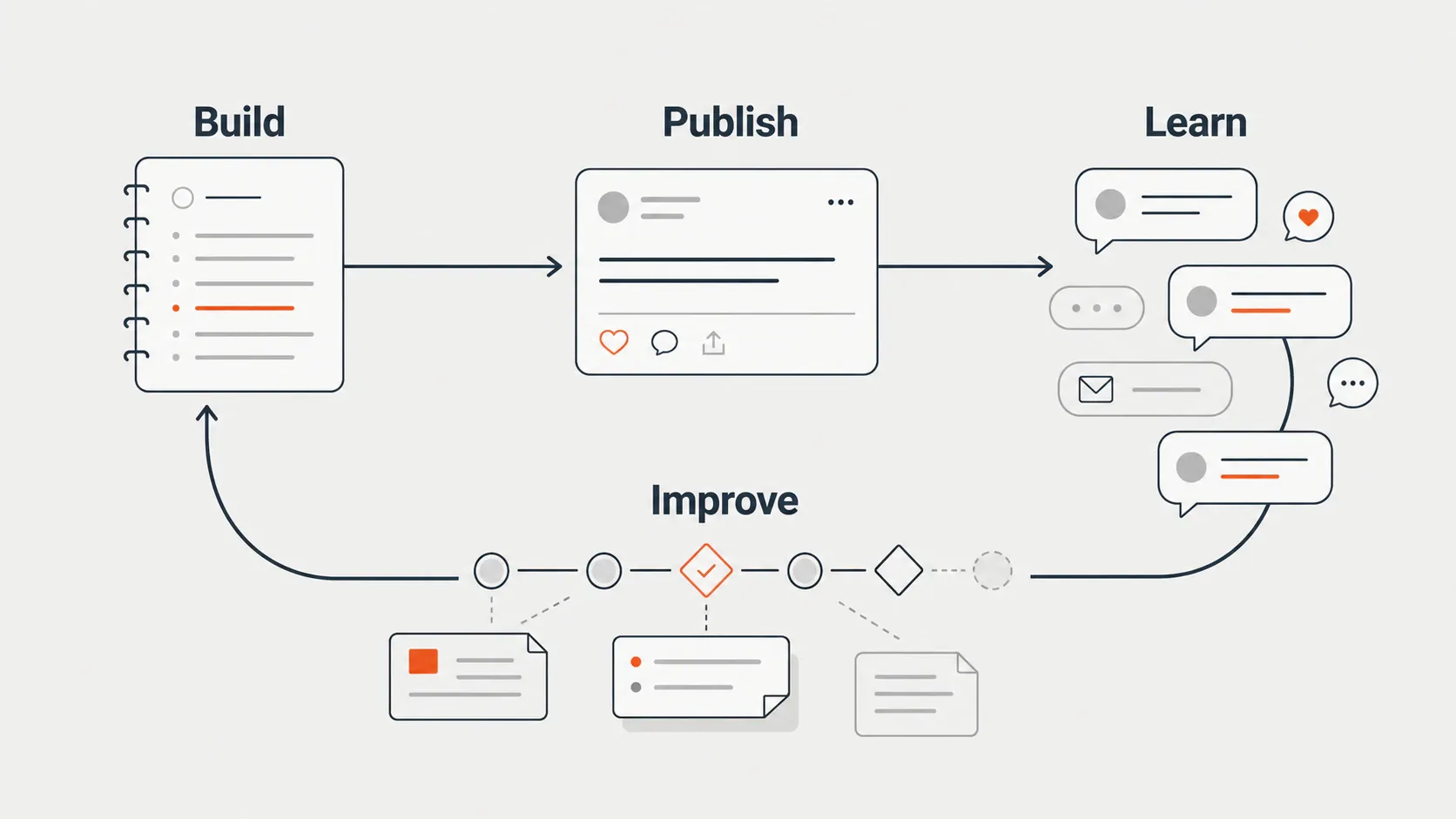
A build-in-public discovery loop has six steps: 1) build or decide something real, 2) document the decision privately, 3) publish the useful and safe version, 4) collect replies, comments, and DMs, 5) tag the signal by audience and theme, and 6) update the product, message, or product journey.
This borrows from the broader discipline of continuous discovery. Teresa Torres defines continuous discovery as at least weekly customer touchpoints by the team building the product, using small research activities in pursuit of a desired outcome (Product Talk). Build in public is not a replacement for customer interviews, but it can create more surface area for discovery: people react to your reasoning, challenge assumptions, share parallel experiences, and sometimes reveal the words they would use to describe the problem.
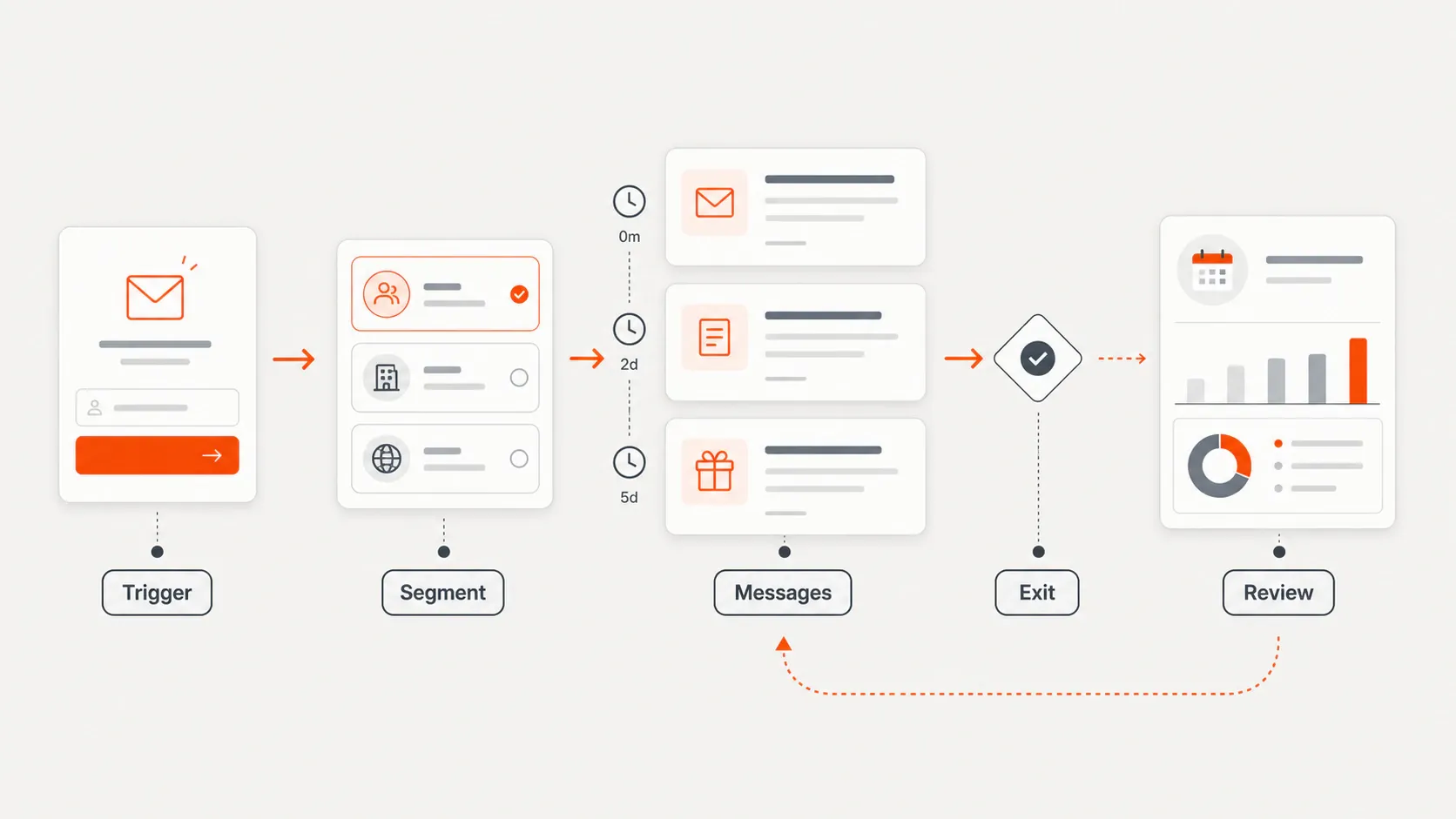
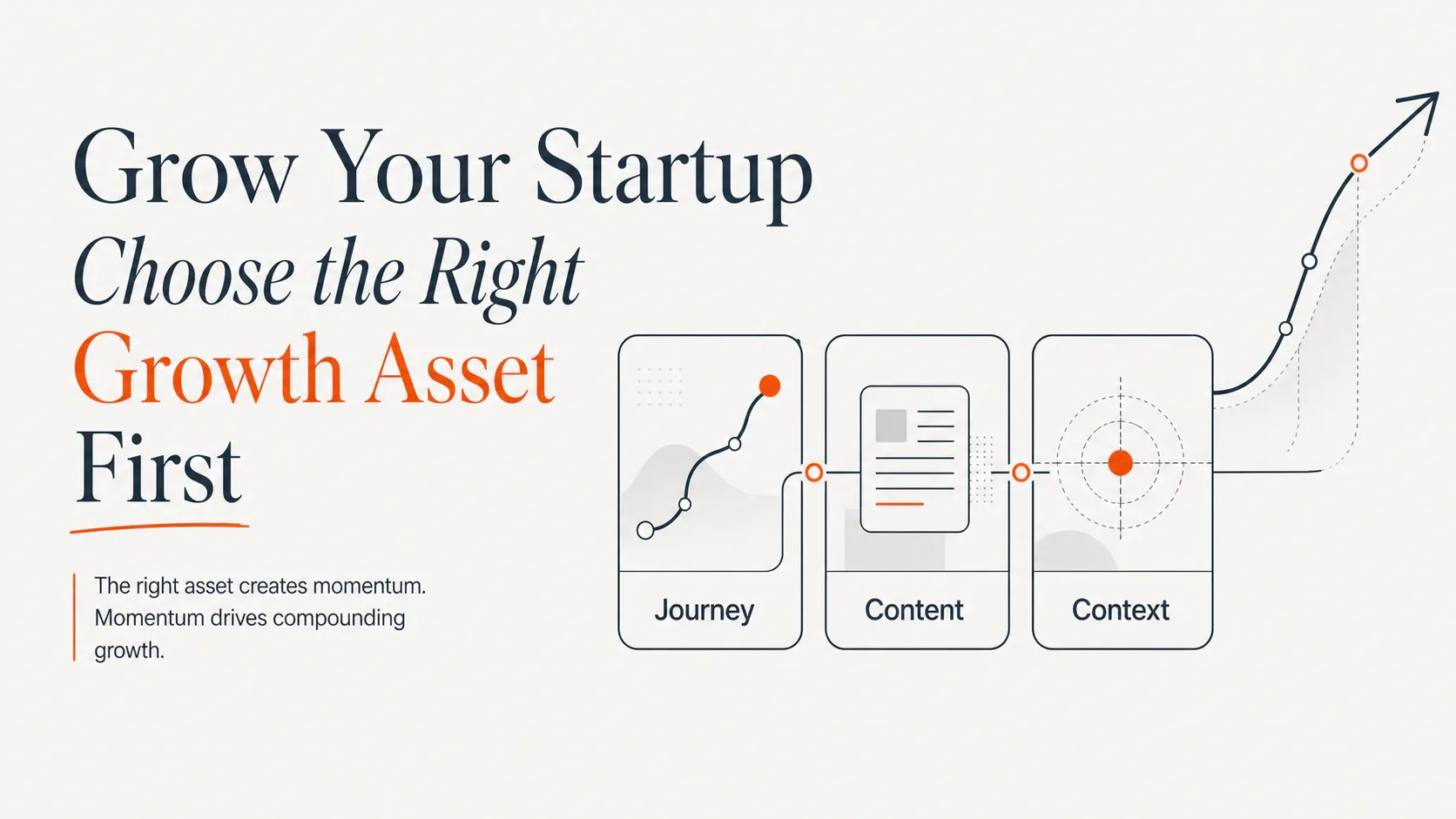
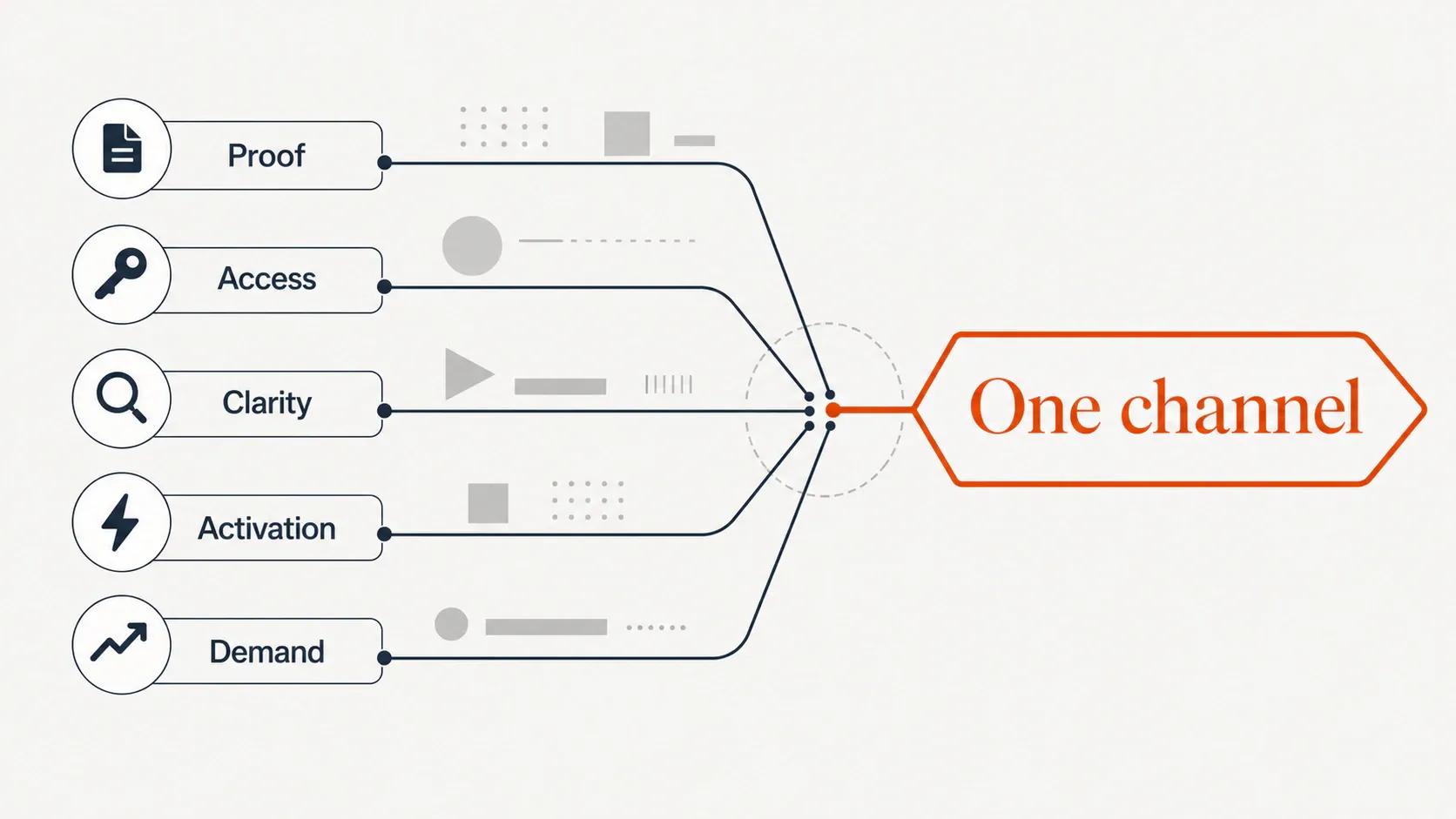
The practical benefit is that one public update can serve multiple jobs. It can help your audience understand what you are building, invite early user conversations, test messaging, and create reusable context for future founder-led content. FounderHQ fits this kind of work as a focused operating system for early-stage product teams that need to build product journeys, compose founder-led content, and keep company context in one place (FounderHQ).
Pick one public learning lane before you post
Trying to be transparent about everything creates noise. It also raises the odds that you share something you later wish you had kept private. A better default is to choose one learning lane for the next 30 to 60 days.
Useful lanes include:
- Product decisions: why you chose one feature, workflow, or constraint over another.
- Onboarding and activation: what changed in the first-value journey and what signal you are watching.
- Positioning: how you are describing the problem and which wording resonates.
- Customer problems: anonymized patterns you are hearing from users or prospects.
- Founder lessons: what surprised you while building, selling, or supporting the product.
- Market thesis: what you believe is changing and how that affects the product.
Use this decision rule: choose the lane where public feedback can improve the business in the next 30 to 60 days. If you are struggling with activation, share decisions about onboarding and first value. If prospects understand the feature but not the category, share positioning trade-offs. If you are still validating urgency, share problem patterns and ask for specific reactions.
What to capture privately before you publish publicly
The best build-in-public posts rarely start from a blank post box. They start from operating notes. A lightweight build log gives you a private source of truth, so public updates become an extraction step rather than a separate creative burden.
Your build log can be simple:
Field | What to capture |
|---|---|
Date | When the decision or experiment happened |
Decision | What changed or what you chose |
Options considered | The two or three paths you rejected or delayed |
Reason | The constraint, user signal, or belief behind the choice |
Signal | What you heard, measured, observed, or inferred |
Result | What happened after the change, if known |
Safe to share? | Public, anonymized, delayed, or private |
This structure matters because specificity is what makes public learning work. “We improved onboarding” is a broadcast. “We removed one setup step because three trial users stalled before reaching the first useful screen” is a decision people can respond to. It invites better replies: Was the step confusing? Was it too early? Did users need an example first?
Keep the private version richer than the public version. Your internal notes can include exact customer quotes, screenshots, revenue context, roadmap detail, and team reasoning. The public version should preserve the lesson while stripping anything that creates customer, team, security, or competitive risk.
Five build-in-public updates that create useful feedback
You do not need endless post formats. You need a few update types that turn real product work into targeted questions.
1. The decision post
Use this when you made a product, positioning, or go-to-market trade-off. Explain the options, the constraint, and the choice. Then ask for a reaction from the exact audience you care about.
Template: “We considered [option A] and [option B] for [specific problem]. We chose [option A] because [reason]. If you have solved this in [context], what would you have checked before deciding?”
2. The before-and-after post
Use this when you changed a flow, message, landing-page section, or onboarding step. Show what changed and why. The feedback you want is not applause; it is whether the new version reduces confusion.
Template: “Before: [old version]. After: [new version]. The problem was [friction]. We are watching [signal]. Which part still feels unclear?”
3. The problem-pattern post
Use this when multiple users or prospects describe the same pain in different words. Do not expose the people. Share the anonymized pattern and ask whether others recognize it.
Template: “A pattern we keep hearing from [audience]: [problem in plain language]. It seems to show up when [situation]. If this happens in your team, what usually causes it?”
4. The experiment post
Use this when you are testing a product or messaging hypothesis. Share the hypothesis, the change, and the signal you are watching.
Template: “Hypothesis: [belief]. Change: [what we changed]. Signal: [what we will watch]. If this fails, our next guess is [next path]. What would you test first?”
5. The lesson post
Use this when something surprised you. The most useful lesson posts are not vague reflections; they connect surprise to the next decision.
Template: “We expected [belief]. What happened: [observation]. The lesson: [specific takeaway]. Next, we are changing [decision].”
How to ask for feedback without letting the audience hijack the roadmap
Public feedback is not a product strategy. It is input. The founder’s job is to separate signal from volume.
Ask narrow questions. “What should we build?” invites opinions from everyone. “Which of these two onboarding steps is more confusing?” invites useful input from people close to the problem. The narrower the question, the easier it is to interpret the answer.
Tag feedback by source before you act on it:
- Target user: likely to reveal product friction, language, workflow constraints, or willingness to try.
- Buyer or evaluator: useful for packaging, trust, objections, and urgency.
- Peer founder: useful for tactics and pattern recognition, but not always representative of your customer.
- Investor or advisor: useful for strategic framing, but may overweight market shape over user pain.
- Generic engagement: useful for reach, but weak as product evidence.
A high-engagement reply from someone outside your audience should not outweigh a quiet DM from the exact person you are building for. Treat public input the way you would treat any discovery input: look for repeated patterns, concrete examples, and behavior-adjacent signals.
The selective-transparency rule: share the lesson, protect the sensitive details
Modern build in public is selective transparency, not radical transparency. The goal is to share enough reasoning to help people learn and respond, while protecting anything that belongs to customers, employees, partners, or the future of the business.
Safe defaults:
- Share reasoning, constraints, anonymized patterns, and lessons.
- Delay sharing details that reveal unreleased strategy.
- Convert exact sensitive numbers into directional context when the exact number is not necessary.
- Ask permission before using customer names, screenshots, quotes, or identifiable stories.
- Keep security issues, private team matters, legal issues, fundraising details, and customer data out of public posts.
This is consistent with current build-in-public risk guidance. HotPress frames building in public as selectively sharing metrics, decisions, and lessons while keeping customer data, security architecture, competitive intelligence, team conflicts, and others’ private information private (HotPress). BuildInPublic.so similarly warns against sharing customer data without permission, exposing security vulnerabilities before they are patched, or posting anything that belongs to someone else (BuildInPublic.so).
A simple filter helps: share the lesson, not the liability. “We learned that setup instructions need to match the user’s first job” is useful. “Here is a screenshot of a confused customer’s workspace” is careless. The first creates learning. The second burns trust.
A weekly 45-minute build-in-public feedback loop
The loop should be light enough to survive busy weeks. If it requires a full content day, it will eventually lose to product, sales, support, and fundraising. Here is a 45-minute version a founder or tiny team can run once a week.
Use this visual as the operating rhythm: review the week’s real work, choose one decision worth learning from, publish the useful version, and tag the replies before they disappear into the feed.
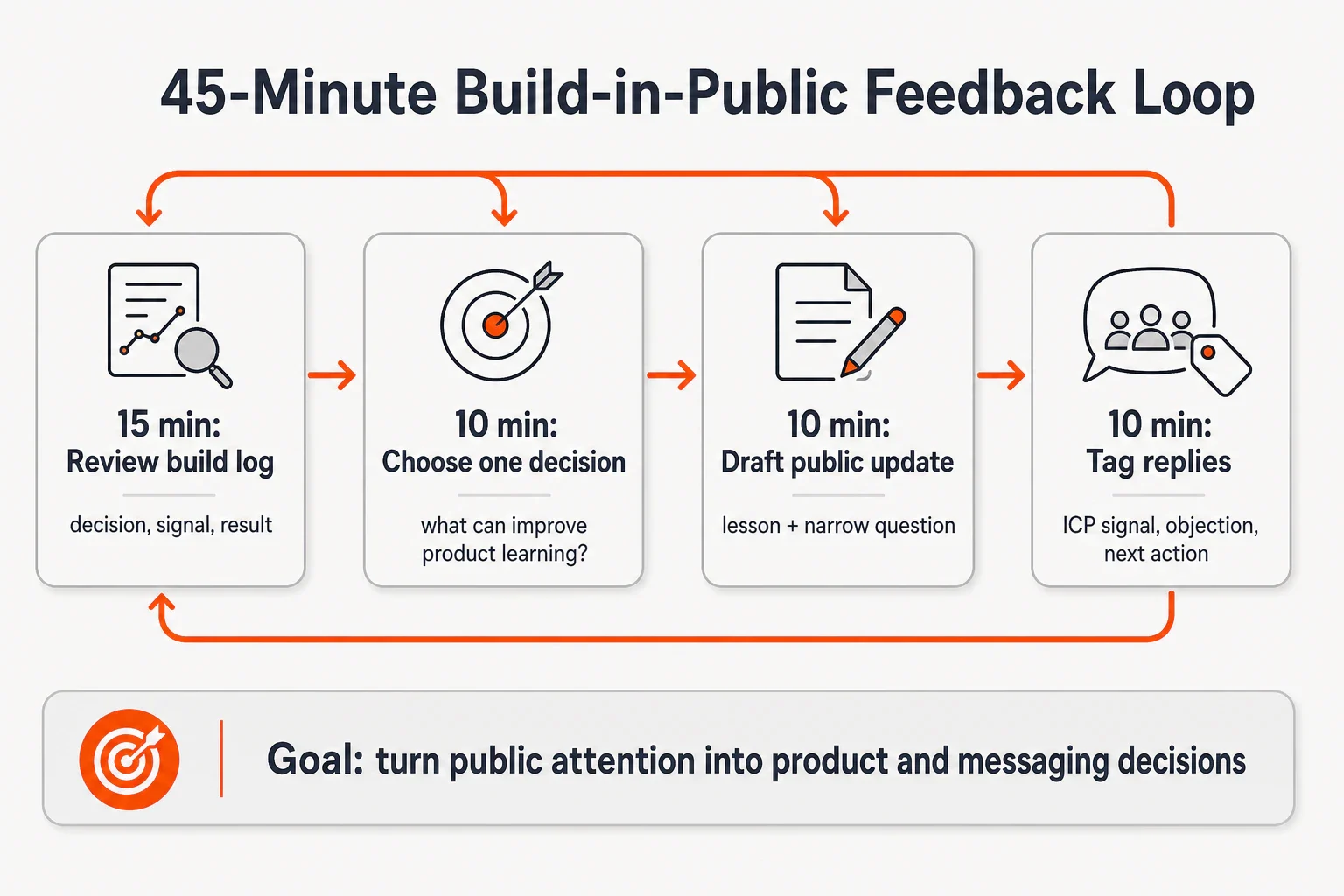
- 15 minutes: Review the build log. Look for one decision, surprise, customer pattern, or experiment that changed how you think about the product.
- 10 minutes: Choose one decision. Pick the item where public feedback could improve onboarding, positioning, roadmap, or customer understanding.
- 10 minutes: Draft the update. Use the structure: “We noticed [problem]. We considered [option A/B]. We chose [decision] because [reason]. We are watching [signal]. If you have faced this, what would you check first?”
- 10 minutes after posting: Tag replies. Label replies as ICP signal, objection, language, feature request, peer advice, or generic engagement. Add one next action if the signal is strong.
The key is closing the loop. If public feedback changes the product, message, or journey, say so later. “Several of you pointed out that the confusing part was not the setup step but the example data. We changed the empty state first.” That follow-up teaches the audience how you think and shows that the conversation shaped the work.
How to know the loop is working
Do not judge this loop only by likes or follower growth. Those can be useful distribution signals, but they do not prove that build in public is improving the company.
Better indicators include:
- Replies from people who match your target user, buyer, or evaluator.
- Clearer objections you can address in product, sales, or onboarding.
- Repeated customer language that improves your messaging.
- DMs that turn into discovery calls, beta users, or product walkthroughs.
- Better ideas for activation, onboarding, or first-value moments.
- Public follow-ups that become reusable founder-led content inputs.
- Fewer blank-page moments because the build log keeps accumulating context.
If the loop is working, your product and message should feel less guessed-at over time. You should have better words for the problem, fewer vague assumptions, and a clearer sense of which parts of the product journey create momentum or friction.
Common mistakes that make build in public feel fake
Build in public starts to feel fake when it stops being connected to real work. The most common failure modes are easy to spot.
- Posting milestones without the decision behind them. “We shipped X” is less useful than why X mattered and what trade-off it required.
- Sharing vague struggles. “Startup life is hard” may be true, but it teaches nothing unless it names the actual constraint.
- Turning every post into a flex. If every update ends in a win, people stop trusting the process.
- Asking the whole internet for strategy. Public feedback works best when the question is specific and the audience is relevant.
- Failing to close the loop. If people give useful feedback and never hear what changed, the conversation becomes extractive.
- Oversharing sensitive details. Transparency does not excuse exposing customer data, team issues, unreleased strategy, or security context.
The fix is to anchor every update in a real decision and a real learning goal. Before posting, ask: “What can this help us learn?” If the answer is only “it might get engagement,” choose a different update.
Build in public should make the product sharper
The strongest build-in-public system does not add a second job. It turns the work you are already doing into a learning asset. The build log captures context. The public update invites the right people into the reasoning. The replies reveal language, objections, confusion, and interest. The product journey gets sharper because the loop keeps feeding it new signal.
That is especially important for early-stage teams. You do not need another blank-page workflow. You need leverage: a way to connect product decisions, founder-led content, and company context so each week’s work compounds into better messages, better conversations, and better product choices.
Build in public is worth doing when it improves the build. Treat it as product discovery in public, not performance in public, and it becomes a practical operating loop rather than a content obligation.
Conclusion
The next time you sit down to write a build-in-public update, do not start with “What should I post?” Start with “What did we learn this week that could help the right people respond?” Capture the decision, redact the sensitive details, ask a narrow question, and feed the strongest signal back into the product. That is how build in public becomes more than visibility—it becomes a loop for building a sharper company.